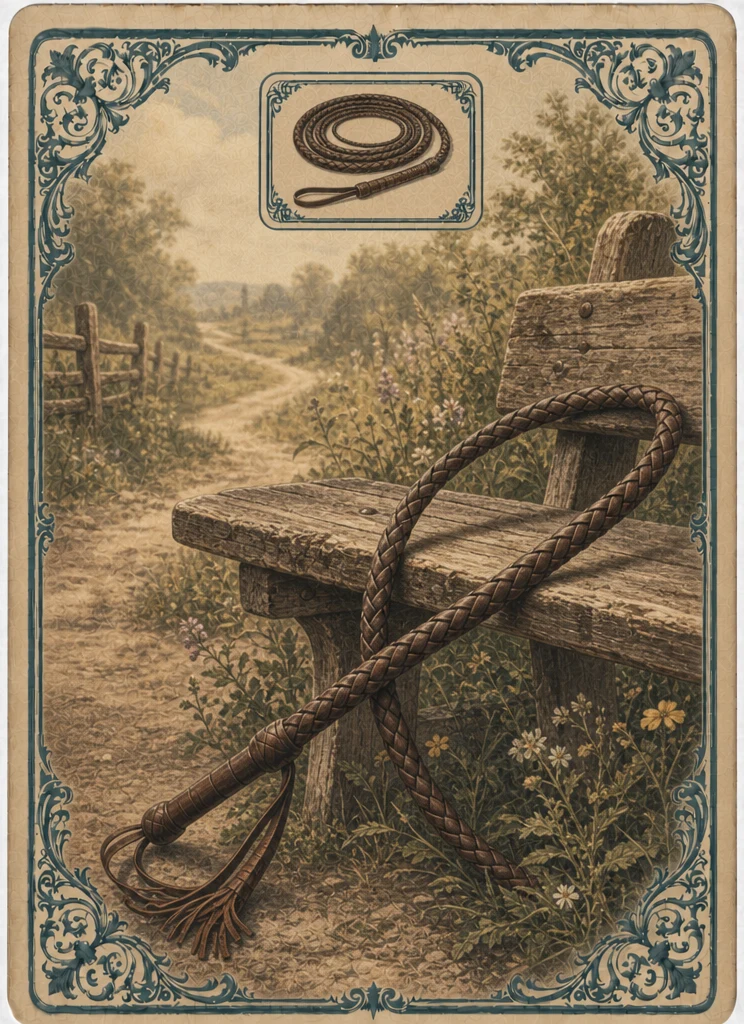
LENORMAND CARD ARCHIVE · 11 · Shadow
Whip
Also known as: Broom, Rod
Repetition · conflict · exertion
Whip points to something repeated: an argument, criticism, a demanding practice or a recurring pattern. Its force may be conflictual, but context can also make it training or disciplined effort.
Content project: Lenormand Cards · Editorial method & sources
Back to card referenceQuick facts
- Playing-card link
- Jack of Clubs
- Yes / No
- No
- Timing
- Repeated; the pattern continues until someone changes it
- Learning label
- Shadow
In love
In love, Whip can describe a recurring disagreement, repeated tension, or a pattern the people involved keep revisiting.
At work
At work, it may indicate repetitive effort, demanding practice, or a discussion that becomes heated through repetition.
Health theme
Strain, exertion, and the need for recovery between efforts
As advice
Name the repeating trigger, set a clear boundary, and make space for rest before the same exchange starts again.
Timing
Repeated; the pattern continues until someone changes it
Symbolism
A repeated stroke can be conflict or practice; the question decides which one matters.
Combination example
Whip + Birds can describe repeated arguments or conversations that keep returning to the same issue. Open related card: Birds
Turn a card meaning into a useful reading
- Choose one concrete keyword that fits your question.
- Read it with the adjacent card; describe how the second symbol changes the first.
- Write one sentence, then separate the symbolic suggestion from facts you can check.
Sources & reading notes
These are AI-assisted learning summaries, not a single authoritative Lenormand doctrine. Traditions vary; the question and neighboring cards change the interpretation.
A starting point for deeper study: The Complete Lenormand Oracle Handbook — Caitlín Matthews, Destiny Books, 2014. Publisher's book details
The publisher lists this book as covering card meanings, combinations, three- and five-card layouts, larger spreads, and historical context. This is a bibliographic recommendation; we do not claim that its author endorses this site or that every entry reproduces the book.
About, editorial method & sources →