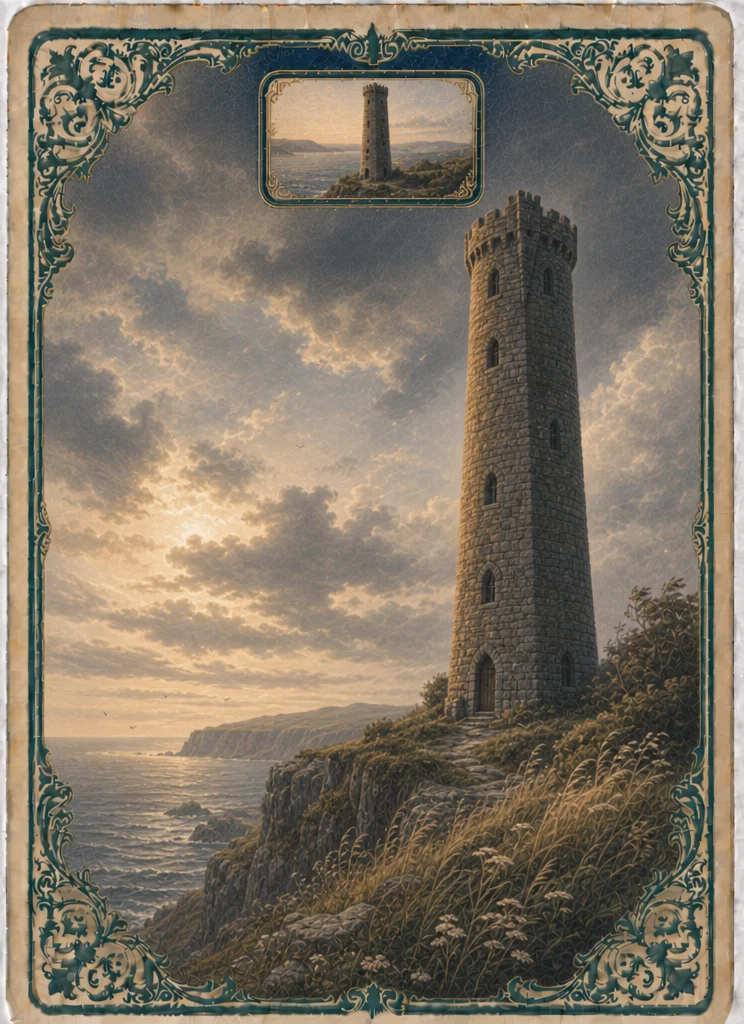
LENORMAND CARD ARCHIVE · 19 · Shadow
Tower
Also known as: The Tower
Institution · boundaries · separation
Tower represents structures that stand apart: institutions, official systems, independence, hierarchy or isolation. It can make a subject more formal, distant or clearly bounded.
Content project: Lenormand Cards · Editorial method & sources
Back to card referenceQuick facts
- Playing-card link
- 6 of Spades
- Yes / No
- Caution
- Timing
- Formal and distant; allow time for institutions to respond
- Learning label
- Shadow
In love
In love, Tower can point to independence, personal space, distance, or a need for clearer boundaries.
At work
At work, it often relates to institutions, formal structures, hierarchy, or responsibilities handled independently.
Health theme
Boundaries, solitude, and the need to balance independence with connection
As advice
Set a healthy boundary, then consider whether the distance is protecting you or preventing useful communication.
Timing
Formal and distant; allow time for institutions to respond
Symbolism
A tower separates and elevates: institution, privacy, hierarchy, or a clear boundary.
Combination example
Tower + Letter can suggest official correspondence or a document from an institution. Open related card: Letter
Turn a card meaning into a useful reading
- Choose one concrete keyword that fits your question.
- Read it with the adjacent card; describe how the second symbol changes the first.
- Write one sentence, then separate the symbolic suggestion from facts you can check.
Sources & reading notes
These are AI-assisted learning summaries, not a single authoritative Lenormand doctrine. Traditions vary; the question and neighboring cards change the interpretation.
A starting point for deeper study: The Complete Lenormand Oracle Handbook — Caitlín Matthews, Destiny Books, 2014. Publisher's book details
The publisher lists this book as covering card meanings, combinations, three- and five-card layouts, larger spreads, and historical context. This is a bibliographic recommendation; we do not claim that its author endorses this site or that every entry reproduces the book.
About, editorial method & sources →