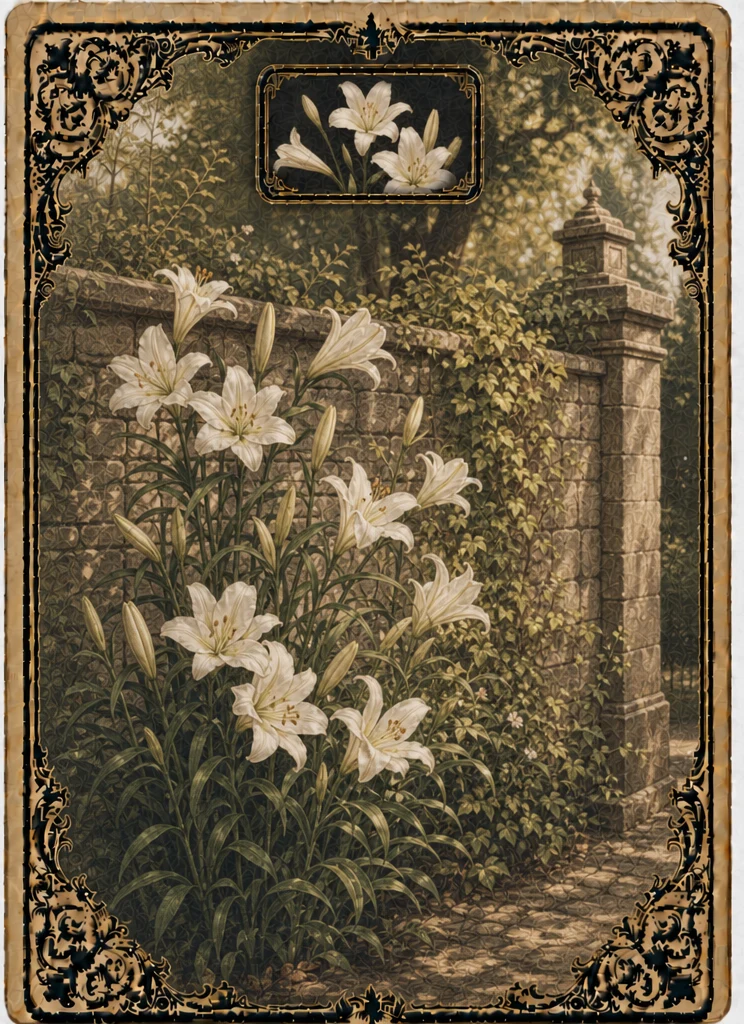
LENORMAND CARD ARCHIVE · 30 · Neutral
Lilies
Also known as: Lily
Maturity · peace · sensuality
Lilies often describe maturity, calm, experience or an established sense of harmony. Some traditions emphasize sensuality and intimacy, so the question and chosen school matter especially here.
Content project: Lenormand Cards · Editorial method & sources
Back to card referenceQuick facts
- Playing-card link
- King of Spades
- Yes / No
- Caution
- Timing
- Measured and mature; patience improves the outcome
- Learning label
- Neutral
In love
In love, Lilies may emphasize maturity, calm, intimacy, or a shared preference for a measured pace.
At work
At work, it can describe experience, senior influence, an orderly approach, or a matter requiring patience.
Health theme
Calm, rest, maturity, and clear personal boundaries
As advice
Respond with composure and clarify what maturity, intimacy, and personal boundaries mean to everyone involved.
Timing
Measured and mature; patience improves the outcome
Symbolism
Lilies bring composure, experience, peace, and a slower form of intimacy.
Combination example
Lilies + House can suggest a peaceful home or an established family environment. Open related card: Ring
Turn a card meaning into a useful reading
- Choose one concrete keyword that fits your question.
- Read it with the adjacent card; describe how the second symbol changes the first.
- Write one sentence, then separate the symbolic suggestion from facts you can check.
Sources & reading notes
These are AI-assisted learning summaries, not a single authoritative Lenormand doctrine. Traditions vary; the question and neighboring cards change the interpretation.
A starting point for deeper study: The Complete Lenormand Oracle Handbook — Caitlín Matthews, Destiny Books, 2014. Publisher's book details
The publisher lists this book as covering card meanings, combinations, three- and five-card layouts, larger spreads, and historical context. This is a bibliographic recommendation; we do not claim that its author endorses this site or that every entry reproduces the book.
About, editorial method & sources →